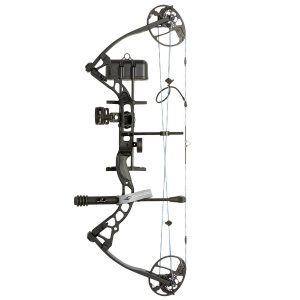
The Best Compound Bows

Complete Comparisons and Reviews

Targeting Tips: How to Aim a Compound Bow

by thehoth

how to aim

In October of 2018, USA Archery official unveiled its 2019 United States Archery Team. This elite group of professionals will travel the country representing the best that the sport has to offer.

Do you dream of taking one of these coveted spots one day?

If so, you’ll need to master the art of archery first, and that begins with learning how to aim your compound bow.

Perhaps you’re an amateur just picking up your bow and arrow for the first time. Or, maybe you’re a seasoned pro who got rusty after a little time off.

Regardless, you’ve come to the right spot. Today, we’re teaching you how to perfect your aiming method in a few steps. Ready to learn more? Pick up your equipment and let’s get started!

What Is a Compound Bow?

Before we delve into the mechanics of how one works, let’s first review what a compound bow is. In short, this bow employs a set of complex pulleys that serve to force an arrow through the air toward its target.

More traditional bows, including recurve bows and longbows, are devoid of such modern mechanisms. Instead, they require powerful upper body strength, as sheer force is required to draw the arrows. As such, you’ll also need to stand closer to your target with these types of bows.

A compound bow, on the other hand, allows you to put more distance between yourself and the target. It also relies less on bodily strength and more on a deep knowledge of proper aiming techniques. They’re ideal for beginner archers, as they allow you to focus on your form and strategy over more advanced aspects of the skill.

Below, let’s take a look at a few steps to take when aiming a compound bow.

1. Release Tense Muscles

It’s proven that stress can directly lead to muscle tension, which can impact an athlete’s motor skills. To improve your odds of hitting the target every time, be sure to warm up your shoulders before you pick up your bow.

Try a few simple stretching exercises to get yours in peak condition. Continue those motions into your neck and upper back to make sure you’re loose and ready for action.

Right before you release the arrow, take note of your muscle tension again. Archers tend to carry stress in their forearms, which can throw off their aim. Make sure yours is relaxed and in position, shifting that tension instead to your tricep if possible. The result will be a smoother, more consistent shot.

2. Look at Your Feet

You know how important a golfer’s stance is to his or her performance? The same holds true with archery.

If your feet and legs aren’t aligned in the correct position, your entire posture will be off-kilter, which could throw off your aim. Successful archery aiming is rooted in finding your perfect stance.

Begin by finding your target and facing it at a 90-degree angle. Then, place your feet as wide as your shoulders. Rather than keeping both your feet pointing entirely in the same direction, lift your lead foot and turn it outward at a slight angle.

At this point, resist the urge to lean in a particular direction. Rather, balance your weight as evenly as possible between your feet. If you find that you become wobbly easily, there are several single-leg exercises you can perform to improve your balance.

3. Grasp the Bow

There are myriad complicated compound bow holds out there. However, in reality, unless you grab the bow in a natural way, you’ll be hard-pressed to repeat that move every time. What’s more, you’ll have to strain more to maintain that specific grip throughout the duration of the shot.

So, it’s wise to hold the bow naturally, putting the majority of the grip pressure on your lower thumb.

While you may feel the urge to squeeze the bow and put your fingers directly against it, turn your hand outward instead. This helps to relieve any built-up tension and pressure, allowing you to better maneuver the tool.

4. Find Your Anchor Points

“Anchor points” is an archery term that means the places on your face where sections of the bow graze it as you pull the arrow backward.

Your individual anchor points will differ from someone else’s, but there are three basic regions that define these areas.

Hand-to-Face Point

As the name implies, this is the spot on your face where your hand reaches up and touches as it pulls the arrow. Depending on the length of your draw and your release type, this might be along your jawline. Or, it could be at your cheek or even under your ear.

In general, women will have a shorter draw length, making bows equipped with adjustable lengths on the single cam system especially desirable.

Nose Touch

A preferred though not always possible form, there may be times when your bow setup allows the string to touch your nose as you pull it back. Take note of how you achieved this stance and seek to repeat it in the future.

Kisser Button

If you aren’t using a peep sight, you can use a kisser button to further improve your for. These can take many forms, from a simple knot in your thread to an actual plastic button. You position this object so that it sits against your lips when you’re at full draw.

If you are using a peep sight, you’ll need to bypass the kisser button altogether. Why? A peep sight is a small tool, usually shaped like a ring, that you place inside the string itself. This allows you to see through the string, improving your aim.

These two indicators, which work fine on their own, can often work against each other if applied in tandem. So, use one or the other to make sure your head posture is accurate.

Position the arrow in the string and pull it back, making sure your wrist does not turn in the process. Then, once you have established those anchor points above, notice the ones that feel the most natural.

5. Set Your Eyes on the Target

As mentioned above, a peep sight is an excellent way to help guide your eyes toward the target. Especially if you’re a beginner archer, this can help you train your focus. If you’re wondering how to use compound bow sights, the best rule of thumb is to lead with your instinct.

Most compound bows come equipped with these handy accessories, though not everyone will use them in the same location. If you’re wondering how to use compound bow sights, the best rule of thumb is to lead with your instinct.

When positioning your peep sight, notice where your gaze usually falls. You want to be able to look comfortably through yours when you have your bow drawn to full position. If you’re having to shift your eyes down, up or to the side to get your target in view, move the peep sight until it’s properly aligned.

If your bow does not include a peep sight, you can buy one at your local hobby store. Be sure to select one according to your needs.

Do you commonly shoot at wide-distance ranges? If so, a smaller peep sight is able to accommodate those setups. If you’re used to shooting in low-light conditions, such as at dusk, a larger peep sight is the way to go.

Not sure if yours is correctly aligned? You should be able to spot both your forward sight (attached to your bow) and the target through your peep sight.

6. Try Closing One Eye (Or Don’t)

You’ve likely seen this move in archery competitions, though it’s not a required form. Some athletes find that squinting one eye shut helps them better focus the other. If you’ve ever looked through a telescope to see the night sky, you may have done the same thing.

Try it a few times to see if it works for you. If it improves your aim and allows you to find your target more easily, go for it. If not, that’s OK, too. In fact, leaving both eyes open allows you to have more accurate depth perception and can help you track your arrow after it leaves your bow.

One note: If you do find that shooting with one eye works best for you, try to find out which eye is more dominant than the other. Then, find a compound bow that is built to accommodate that side. For instance, if your left eye is stronger, a bow designed for left-hand use is preferred.

Not sure which eye is the strongest of your two? Try this at-home test.

7. Set Your Distance

Within the forward sight on your compound bow, you will find a few different pins. These are used to designate how far away your target is. For instance, you may be shooting from 20 yards away, 40 yards or more.

Select the pin that matches your target most closely. Next, align your bow to ensure the pin and target are aligned.

Your pins might not be marked as to the distances they represent. If this is the case, you’ll need to work with your bow a few times to determine what they mean. Start by standing 20 yards from your target and try to find your target through each pin.

The one that allows you the greatest control over your target at that spot is your 20 yard one and you can use that as a baseline for the other measurements.

Next, look at the area below your pins. Some bows may include a level in this region, which works similarly to one you’d find at the hardware store, helping to make sure everything is aligned as it should be. Position the bubble in the center of the level if it isn’t already there.

8. Try a Few Focus Techniques

The period of time right before you let your arrow go is a critical one. You might find that aligning your pin lines directly with the target helps you to aim more consistently. Or, you might find that trying to make those precise measurements line up is creating unwanted tension in your upper body.

If the latter is the case, try relaxing your stance a bit and letting the target float in between one or more pins. No, you won’t have as accurate of a draw, but you’ll be better able to repeat your results the next time around if you aren’t as stiff.

In the same vein, some archers prefer to bypass the peep sight and pins altogether and look at the target instead. This can take a more sophisticated degree of skill, though it can help even inexperienced archers eschew the anxiety that comes with trying to get every mechanism perfectly straight.

Learning How to Aim and Excel at Archery

Now that you know how to aim, are you ready to take on the exciting sport of archery? One of our nation’s most longest-lasting and iconic traditions, it’s a game of coordination and precision as much as athleticism.

When you’re ready to take your interest to the next level, we’re here to help. We’ve scoured the internet to find the best compound bows available, along with some of top tricks and tips on how to make the most of your new purchase.

Not sure where to begin? Before you head to the store or start working on your form, check out our introduction to compound bow shooting to learn more about your new favorite sport.

Filed Under: Uncategorized

What’s the Best Compound Bow of 2018?

by thehoth

2018 compound bowCompound bows being together the ingenuity and technology of the 21st century to the tools of the stone age. Few things reflect how far we’ve come and how right we were in the past.

Selecting the right compound bow for your needs similarly combines the problems of many options and price point. Shopping at a store often lacks in-depth information, just technical jargon.

While many options exist for 2018 compound bow choice, some rise above the others. We’ll give you a rundown on what features excel, and which run into diminishing returns territory.

We understand that no one product will fit every user. So in that spirit, just like last year, we will list the compound bow for each of three categories.

  • Best Beginner
  • Best Pro
  • Best for Women

Now, let’s have a look.

2018 Compound Bow Offerings

Each year companies tweak their designs and manufacturing processes to improve the quality of products. Some staple components and features need to be understood to find the best 2018 compound bow.

Generally, a compound bow’s performance gets judged on a few key elements.

  • Portability
  • Speed
  • Draw Weight
  • Quality/Durability
  • Price
  • Purpose

These ordering of these elements isn’t so important, different people will care more about one than another. Read on for full descriptions.

Portability

Firing off a big Japanese style yumi may feel impressive, but it doesn’t lend itself to hunting in tough terrain.

A compound bow offers superior performance in a small package. Look for the smallest bow that offers the features and power desired.

Also, keep in mind the dimensions and accessories. A great bow that gets hung up on a tree won’t do a lick of good in taking down a target.

Speed

Cams on a 2018 compound bow transfer power allowing for a better draw.

Two considerations need to be made about what performance you want out of a cam. One is speed, the other is draw weight.

The speed of an arrow leaving the bow effects accuracy, drop, and spin. Getting the right bow involves knowing what purpose the bow will be used for. Target shooting requires better speed than hunting.

Knowing what arrows will be used and their performance also helps.

Draw Weight

Much like speed, this feature comes from the performance of the cams. Draw weight reflects the maximum draw force. More force on the draw will put more force on an arrow.

Heavier draw weights aid in hunting, where the power of the impact matters. Target shooting and exhibition relies more on speed than draw weight.

Keep in mind arrows when selecting draw weight, a bow with too much power will warp or break weaker arrows.

Quality/Durability

A 2018 compound bow should last more than one season. The quality and durability of the materials should hold up to years of wear and thousands of shots.

While the cams may need to be serviced, and the string replaced on occasion, the frame should last for years. Look for common materials such as carbon fiber, aluminum, and titanium in the frame.

Price

The best 2018 compound bow won’t’ come at the highest price. Price point doesn’t reflect quality, it sometimes just reflects branding or new features without a tried and true history.

When shopping for a bow remember that the majority of compound bows come in under a $400 price point.

Purpose

Finally, consider what your 2018 compound bow will be used for. Don’t pay for features that you can’t use, or won’t assist with your purpose Stay mindful that some features help a lot, but not in a lot of situations.

Best Beginner

The Bear Archery Cruzer reflects the best in beginning archery features. This pick for best 2018 compound bow for beginners earns its place from its versatility.

An adjustable draw weight between 5-70 pounds provides a solid upgrade and learning curve. The adjustable length feature gives room to grow and change. Finally, the let off provides the ability to utilize a variety of different arrow sizes.

Price points hover around $300. The frame material uses aluminum for durability and portability. The double cams give a smooth draw and provide a lot of power for a starter kit.

The biggest drawback of this compound bow is that it doesn’t have the next level features that experienced and pro archers look for.

Best Pro

The Diamond by Bowtech Core wins out over close competition to be the best pro use 2018 compound bow.

Ironically, one of the selling points of the bow is the RAK package which allows out-of-the-box use with no extra set up. Most pros will immediately reset to their preference, but it is a nice touch if you don’t have time to tweak and set up before a hunt.

The draw weight adjusts between 40-70 pounds. The draw weight and length both can be adjusted without changing out the cams, which allows better on-the-fly shifts.

The arrow speeds can clock in at over 310 feet per second for accuracy.

The largest drawback of the bow comes from the arrow rest, which can be tricky to use. This won’t bother most pros but can cause frustration.

Best for Women

Finding the best 2018 compound bow for women has never been easier. Every year companies are seeing the potential and market growth of women entering hunting and archery fields. So more bows now have a female or ‘sister’ equivalent coming down the line.

This year, the Bowtech Carbon Rose reflects the best in tech.

The draw weight adjusts between 30-60 pounds providing the right amount of power in a shorter draw length. Arrow speeds top out just over 300 feet per second.

The axle to axle length fits better for women’s reach and height. The grip works comfortably for smaller hands.

This bow works great for beginners or pros with adjustability and a power curve. The manufacturer also supports a variety of kits to get the bow from bare to loaded quickly.

More Reviews

Check out our site for more reviews and information on the exciting world of compound bows and archery. We are always looking for stories and recommendations. Drop us a line and see if you have what we are looking for.

Don’t just shop around, get the best in reviews and information before you get lost in the woods.

Filed Under: Uncategorized

How to Choose Accessories for Your Compound Bow

by thehoth

compound bow accessoriesIt takes a lot of work and research to get a well-made compound bow that shoots with accuracy and precision. Once you’ve selected a bow that fits you well and you’ve tuned it up properly, you just need to get some compound bow accessories.

There are a variety of great accessories and tools out there made by brand name retailers and aftermarket businesses. It can be confusing to look at all of the accessories if you aren’t sure what you’re after.

However, once you know and understand your options, it will be a piece of cake! Let’s take a look at the different types of accessories you can purchase and how they will improve your hunting experience.

Compound Bow Accessories

There are a bunch of accessories you can choose from including a bow sight, peep sight, bow quiver, arrow rest, and more. If you’re doing research, reading forums about the performance track record of these accessories is helpful.

Bow Sights

The sights for bowhunters on compound bows are different than shotgun or rifle sights. Most high-quality bow sights include a fiber optic sight pin. This allows the hunter to see in dim or low light.

Most sights for bows have three to five sight pins. They can be set at different distances. If your sight does have fiber optics, having a pin guard is necessary to protect it.

You can get a single pin sight as well. These sights allow you to figure out the distance of your target and adjust the sight to match. Single pin sights are more adjustable than multiple pin sights.

Peep Sights

Bow sights are not the only available as compound bow accessories. Peep sights are common and used by most bowhunters. Having the right aperture on your peep sight is the first thing you need to consider.

An aperture of at least a quarter-inch in diameter is going to let a sufficient amount of light in. This is needed if you’re going to be shooting in low light or dim conditions.

There are two types of peep sights you can consider when you’re shopping for one. The first type of peep sight doesn’t use tubing and relies on the peep to center between the bow and bowstring strands. The second type of peep features rubber tubing that stretches when you draw the bow and pulls the peep back into the correct alignment.

Arrow Rests

Arrow rests are crucial compound bow accessories. There are two types of arrow rests for compound bows. They include the full capture and the drop-away.

The full capture arrow rest keeps the arrow in place by using a circle of stiff bristles around the shaft. The bristles do wear out over time and will need replacement in the future as this affects accuracy. Full capture arrow rests are best for shooting medium or short distances.

The drop-away arrow rest holds the arrow in arms that rise and drop. These arms launch the arrow by rising when the bow is drawn and falling away quickly so it doesn’t get in the way of the fletching. These types of arrow rests don’t erode, are more expensive, but have a long lifespan.

Bow Releases

A bow release is an important addition to your compound bow accessories. A release helps to fire arrows with precision and accuracy. There are several different types of these releases.

One type is a handheld release. These use your thumb or pinky finger to release the trigger while the other fingers are used to draw back the string and hold the bow.

The handheld releases are typically smaller and more difficult to maneuver. Many hunters are wary of buying this release because of the learning curve, but once mastered, they are pleased with the system.

Another type of release is the caliper release. This release is also known as the wrist release and is the most popular type. Attaching to your wrist, it is similar to the trigger on a shotgun or rifle and is shot using your index finger.

The ability to use the wrist keeps the shot sturdy and secure because it supports the draw weight. Your index finger and thumb get to relax as they aren’t holding any of the weight.

Quiver

Another important tool to add to your compound bow accessories arsenal is the quiver. You may not need this if your compound bow came with a quiver attached. There are manufacturers that allow you to purchase with your bow or to purchase a detachable quiver.

When hunting from a tree stand, a detachable quiver provides benefits. You can remove it from your bow and hang it on the tree or off of your stand. It will be out of your way and you don’t have to hold it on your bow. If you aren’t a tree stand hunter, using a quiver attached to the bow will be better.

There are different sizes of quivers, but be sure to select one that holds at least four arrows. The best hold four to six arrows. Any more than that and it begins to weigh your bow down.

Stabilizer

Having a good compound bow stabilizer can make or break your hunt. They help to balance the bow and prevent vibration from occurring. Stabilizers come in all shapes and sizes but are typically 4-6 inches. Some of them are up to a foot long.

They are helpful because the less vibration you have, the better your shot will be. Accuracy is a major benefit of purchasing a stabilizer.

Choose Your Accessories

This isn’t all of the compound bow accessories you can use, but now you know a bit more about a few common ones.

These accessories can help enhance your shooting, accuracy, precision and overall compound bow experience. Whether you’re performing in a competition or going out for a hunt, having these accessories will benefit you. If you’re interested in learning about how to find the best compound bows, read this article now!

Filed Under: Uncategorized

The Difference Between a Recurve and Compound Bow

by thehoth

recurve vs compoundOf the millions of archers in America, most of them use compound bows: 71% of target shooters and 83% of bow hunters prefer a compound bow.

What’s so special about compound bows?

In this article guide, we’ll check out recurve vs compound bows to show you why the majority of archers prefer the newer technology.

A Quick History of Archery

People have been using archery since the Stone Age, but what we think of as archery was first used by the Ancient Egyptians about 5,000 years ago. But like any technology, archery was often being improved; the Mongolians are credited with using the first recurve bows.

Before that, archers relied on the longbow. The recurve bow was more compact and could be used from a chariot or while on horseback. The longbow retained its popularity, though.

In the twentieth century, archery was forever and radically changed when, in 1966, Holless Wilbur Allen applied for a compound bow patent. It was granted three years later, and since then, archery has become more powerful and more accurate.

Recurve vs Compound Bows

Power and accuracy are the major differences between these two bows. We’ll look at why compound bows are more powerful and accurate, then we’ll talk about some other differences between these two types of bows.

Compound Bow Are More Powerful

Before we can dive into discussing where power comes into the recurve vs compound argument, you need to have a basic visual of each of these bow types. You can spot a recurve bow by the curve of the limbs and the way that their tips curve away from the archer. Compound bows are easily spotted by the cams and pulley system.

It’s that pulley system that gives the compound bow its power. Because the strings are longer, you can draw the bow back farther, which adds to the power of the shot. The cams and pulley system also help with control, which improves arrow acceleration.

Because it’s a more powerful bow, the compound is great for hunting large prey.

Compound Bows Are More Accurate

In addition to boosting power, those longer strings on a compound bow make each shot more accurate by increasing stability.

Compound bows have what’s known as a let-off point, which means while you’ll feel the draw weight when drawing, you reach a point when you can hold the draw with less effort. The mechanics of the limbs, which pull toward each other horizontally when you draw the bow, and the string length, is what allows for this.

A secondary benefit of the let-off point is that you can hold a compound bow in the drawn position. If you’re hunting, this is especially helpful as it allows you to wait for the right shot. If you were using a recurve bow, you might have to take a less favorable shot or relax the bow and start again.

In the recurve vs compound decision, if accuracy is important to you, remember that compound bows can be used with a scope. Scopes allow for more accuracy at greater distances.

Another handy addition is the mechanical release aid. This improves accuracy as well, and can only be used with a compound bow.

Because a compound bow can fire an arrow with a flatter trajectory, it produces more accurate shots. In contrast, a recurve bow might require a shooter to use an arched trajectory to get a greater distance.

Other Benefits of the Compound Bow

If you’re just starting to explore archery, a compound bow can give you more satisfaction for your efforts for a couple of reasons:

  • It’s more comfortable to use
  • You don’t have to practice as much

Compound bows offer more comfort to the archer because they don’t have as much recoil or vibration. Both recoil and vibration can frustrate beginner archers because they can make it less comfortable to fire the bow at first.

With a recurve bow, the primary focus is on the physical elements of shooting: the stance, the posture, the draw, and the breathing, for example. These are still important when shooting a compound bow, but the cams and pulleys place less emphasis on physical shooting style.

For this reason, archers who use recurve bows have to practice more, and they have to practice consistently. Fans of recurve bows love this, because that physical focus is what they tend to love most about archery. But for beginner archers, or for archers who can’t devote that time on a regular basis to build muscle memory, the compound bow is a fantastic way to get into the sport of archery.

Because the compound bow has longer strings and accessories, it can be more expensive. However, recurve bows can rise in price depending on the bow–especially if it’s an artisan item. Finding the right compound bow brand for you can help mitigate budgetary concerns.

Draw weight isn’t as important with a compound bow. With a recurve bow, draw weight is a concern because of the actual strength required to draw the bow, but also because the archer usually has to hold that weight to hold the shot. Because of the let-off point, compound bows don’t have this concern.

And draw weight can be a concern. If your bow requires too much strength to operate, you can do permanent damage to your muscles and tendons. That’s why it’s important to start with a lighter draw weight and then increase as you get more practice.

Recurve vs Compound Bows: Final Thoughts

Your archery priorities will determine which bow is best for you. But if power, accuracy, and comfort are important to you, or if you plan to hunt — especially larger game — then a compound bow is the way to go.

If you have questions, or if you would like to get your archery recommendations out there via a guest post, we welcome you to reach out to us today.

Filed Under: Uncategorized

Review: The PSE Brute X Compound Bow

by thehoth

pse brute xDid you know that one out of every five hunters in America is a bowhunter?

And the weapon of choice for most hunters is the compound bow.

Why is that, you ask?

A compound bow like the PSE Brute X can fire an arrow at a speed of more than 300 feet per second. That’s about the same top speed as a Porsche 911, a Lamborghini Gallardo, or the TGV trains in France.

Yup. That’s pretty darn fast.

This bow lets hunters track and shoot their prey from greater distances while staying accurate.

How Do Compound Bows Work?

Compound bows use a system of cables, pulleys, and cams to bend the bow’s limbs. The mechanical advantage generated by this system allows the bows to be constructed with materials of high tensile strength.

This, in turn, allows for more stored potential energy in the limbs. As a result, compound bows have greater force production during the draw, and faster arrow speeds on release.

Another feature that sets compound bows apart from other bows like recurve bows and longbows is that they have a meager draw weight at full draw length.

The system of cams and pulleys work together to produce a dramatic drop in draw weight towards the end of the draw. This reduces the amount of muscle fatigue the archer experiences and makes it easier to handle the bow and adjust aim.

The ease of draw and the faster arrow speed make compound bows exceptionally suited to hunting game of different sizes.

Today, compound bows come in all shapes and sizes and can range from very cheap to very expensive. The sheer variety of choice available on the market can be quite daunting.

However, if you’re in the market for a compound bow and are looking for suggestions, we highly recommend the PSE Brute X compound bow.

Overview of The PSE Brute X

The PSE Brute X is a compound bow manufactured by PSE, a world leader in archery equipment. PSE offers a wide variety of compound bows, and the PSE Brute X is one of their most popular models.

We conducted a detailed series of tests during our review, to try and learn as much as we could about this bow.

In this review, we’ll cover various attributes of the bow and give you our thoughts on the product. Read on to see why this bow is adored by legions of archery enthusiasts and is one of our favorites as well.

1. Dimensions & Specifications

The PSE Brute X bow weighs 4.3 pounds. It has a brace height of 7.25″ and a total arm length of 31″. These dimensions make it very easy to maneuver and carry around, without causing excessive fatigue.

The bow comes with three standard draw weights – 50 lbs, 60lbs and 70lbs. Each of these can be further adjusted to suit the needs of the user. The let-off for the PSE Brute X is 75%.

The let-off percentage is an essential feature archers should pay attention to. It indicates how much the draw weight reduces at full draw. A higher let-off percentage results in a much more comfortable full draw.

This gives the archer the ability to adjust his aim and sights without struggling to maintain the bow in the extended draw.

2. Build Quality & Durability

PSE has built itself a reputation for using high-quality materials in all their bows. With the PSE Brute X, they made no exception.

Every component of the bow is machined with very high tolerances, and the overall quality is superb. The limbs and the riser are light-weight, durable, and extremely strong.

This is a bow that can take a beating and then some.

3. Ease of Use

With any bow, there exists a tradeoff between power and ease of draw.

The more comfortable a bow is to draw, the less tension is generated and stored in the limbs. This, in turn, results in a lower power output once the bowstring is released.

One of the most noticeable features of the PSE Brute X is just how easy it is to draw, and still generate superb arrow velocity. There’s no better way to describe it than that it’s buttery smooth.

A smooth draw makes the bow extremely easy for beginners to get accustomed to it. This allows the archer to focus on his form and aim, instead of struggling to pull the string all the way back.

The PSE Brute X’s parallel limb design also allows it to overcome a widespread problem with other compound bow designs. There is virtually no hand-shock.

What is Hand Shock?

When a bow is drawn to the maximum draw length, there is a significant amount of potential energy stored in the limbs of the bow. This power is what propels the arrow out towards the target.

Ideally, all this energy will be transferred to the arrow. But this doesn’t happen in the real world.

When the string is released, some of the energy transfers through the limbs of the bow and onto the archer’s hands. Check out this video of the shockwave captured in slow motion.

Depending on the bow design and shot mechanics, this shock can be quite jarring and painful.

However, the parallel limb design on the PSE Brute X ensures that the excess force does not reach the hand grip. This results in a very comfortable release.

There is one thing that we’d like to point out. The PSE Brute X, while having exceptional usability, does have a very narrow valley.

What Is a Valley?

The valley refers to the distance between the wall at the very end of the draw and the length at which the bow tension increases.

A bow with a long valley is more forgiving to a user. It allows the archer to make minor adjustments to their draw length at the end of the pull without sacrificing form.

In contrast, a short valley provides a tiny window to the archer for adjustments. Stray too far from the wall, and you find a sudden increase in the tension on the string.

The PSE Brute X’s short valley does take some getting used to, but it’s a minor shortcoming in an otherwise delightful and usable bow.

4. Approachability

To a beginner, the very sight of a compound bow can be quite daunting. All those crisscrossing cables, cams, and levers can quickly make a first time user nervous.

The beautiful thing about the PSE Brute X is just how easy and welcoming it is for newbies.

There’s no complicated assembly required. The bow is very customizable. And the smooth draw combined with the high power output all serve to make this bow a great gateway into the world of compound bow shooting.

5. Assembly & Setup

The PSE Brute X comes fully assembled right out of the box. There is little to no adjustment required, which means you can pick it up and walk right out the door to start shooting.

The bow does come with a few attachments, including a wrist sling, 6-arrow quiver, and a couple of other items.

However, all you need to do is shoot a few arrows to get accustomed to the sights, the draw length, and the draw weight.

6. Customization & Adjustments

The PSE Brute X comes assembled with a standard 29″ draw length. However, the length can be adjusted anywhere between 25″ and 30″.

Adjustments can be made in 0.5″ increments, thus allowing the bow to accommodate a variety of draw lengths.

Tuning the bow is remarkably simple thanks to the cam’s laser-engraved notches.

7. Arrow Speed

Ah – arrow speed. The holy grail of compound bow archery, and the specification that all archers obsess about.

So far, we’ve gushed about how easy the PSE Brute X is to use. It’s approachable and a great bow for beginners. But make no mistake – this is a powerful compound bow.

When tested at IBO specifications, it produces an arrow speed of 320 feet per second.

As a reminder, the IBO specifications require the bow to be tested under standard conditions. These conditions include a draw weight of 70 lbs.’, a draw length of 30″, and an arrow weight of 350 grains.

Actual arrow speed can and will vary according to environmental conditions and bow configuration.

8. Kinetic Energy & Stopping Power

The actual stopping power of the bow is measured by the kinetic energy it releases. The kinetic energy is maximum at point-blank range and then deteriorates the further the arrow has to travel.

With the Brute X set up according to IBO specifications, you can expect this bow to release 72 lb-ft of kinetic energy at point blank range. The energy depletes at an average rate of approximately two lb-ft every 10 yards.

This means that if you shoot at a target that is 50 yards away, the arrow will strike it with a kinetic energy of about 62 lb-ft.

What does that translate to in the real world? At 62 lb-ft, you’d have enough power to hunt a black bear!

9. Maintenance

This bow comes with the PSE’s patented Madness Pro(TM) cam system.

The proprietary single cam system has a power cam attached to the bottom limb and an idler wheel on the top arm.

Because of the presence of just one cam, the Brute X does not require any synchronization. This results in a bow that’s very low maintenance, requiring little tuning, if any.

10. Noise Level

For the hunting enthusiast, being able to approach and shoot at the quarry stealthily is very important.

The PSE Brute X has hush-kit dampeners that are attached to the limbs. These dampeners are made of rubber and help to reduce noise as well as vibration levels.

The bow keeps the noise down to a minimum. The string stop is rubberized and absorbs the vibration from the string after it has been released, resulting in further dampening and noise reduction.

11. Appearance

What’s that saying about beauty lying in the eyes of the beholder? Well, that old chestnut doesn’t apply here.

No matter how you look at it – there’s no denying that the Brute X is a handsome bow.

The split-limb design coupled with the high-quality craftsmanship combine to create a great looking package.

The bow comes in a single color scheme – a mossy camouflage print. You don’t get a whole color palette to choose from, but the camo print looks very cool.

12. Price & Value for Money

The one thing that beginners may not realize when using this bow is just how much value for money they’re getting with it. This bow looks and shoots like other bows priced twice as high.

It’s amazing how feature-rich PSE has made this bow, and yet managed to keep it at this price point.

The quality of the materials, the precision, and the usability of this bow make the current price a no-brainer.

Bringing It All Together

If you couldn’t tell by now, we love the PSE Brute X. This bow is phenomenal. Here’s a quick recap of all the pros and cons we’ve listed.

Pros:

  • Great build quality as we’ve come to expect from PSE
  • Exceptional usability
  • Very approachable; a great bow for beginners and experienced archers alike
  • Ready to shoot
  • Customizable to suit a variety of archer preferences
  • Breakneck arrow speed
  • Great stopping power
  • Low maintenance
  • Very quiet
  • Good looks
  • Fantastic Value for money

Cons:

  • Short valley length takes some getting used to

In summary, the PSE Brute X is a great compound bow, and we highly recommend it to anyone who’s looking for a robust starter model.

Moving Forward

Compound bow archery is a fun and exciting sport. It also boasts a range of health benefits.

No longer is archery solely a man’s domain – women and children are discovering the joys of the sport as well. In fact, women represent the fastest-growing group of members today.

If you’re a beginner who’s just getting their feet wet, check out our recommendations on the best bows for those who are new to the sport.

We’ve also covered several recommendations for women interested in getting started with compound bow archery. You can check them out here.

If you’re new to compound bow shooting, head on over to our site and check out our introduction to compound bow shooting.

And finally, once you’ve decided to take the plunge and immerse yourself in the world of compound bow shooting, you will need to buy a bow. Here are the six easy steps to buying the best value compound bow.

Filed Under: Uncategorized

The Smartest Way to Shop for the Best Compound Bow

by thehoth

best compound bowArchery is a popular sporting choice for both hunters and leisure-seekers. In fact, recent estimates indicate that almost 19 million Americans participate in archery.

Whether you are already an archery enthusiast or you are just looking to get started with the sport, it’s important to have the right equipment. Choosing the right bow will help you improve accuracy and avoid injury.

But choosing archery equipment is also a big investment. So, before you drop a significant amount of cash, it’s important to learn how to get the best compound bow. Here’s everything you need to know before making an investment.

Why Choose a Compound Bow?

Before we look at the specifics of choosing the best compound bow for your needs, let’s take a closer look at available bow options. Why is the compound bow the best choice for archers?

Types of Bows

The sport of archery is over 10,000 years old. During that time, archers have developed a variety of bows to refine their craft. Most bows fit into one of four categories: longbow, crossbow, recurve, and compound bow.

Longbows are one of the most ancient types of bows, and so they are very minimalistic. They typically consist of simply a bent piece of wood and string and don’t include features like an arrow rest or a sight. This makes them more difficult to aim.

By contrast, crossbows are operated with a much more complicated mechanism. In a crossbow, the string is attached to a trigger, making the bow operate like a firearm. For this reason, crossbows are subject to restrictions in most states.

Recurve bows are often used for teaching beginners. Recurve bows are so named because they are curved on either end. Because of this feature, they require less power to use.

Features of a Compound Bow

So now that we have looked at some other common types of bows, let’s see what makes a compound bow unique. Understanding how a compound bow works will help you make the decision about the best compound bow for you.

Compound bows are a fairly modern type of bow, first invented in the 1960s. This bow’s design contains a system of pulleys and cables that help the archer to draw the string. This helps archers to pull the bow to a full draw without overworking their muscles.

Because of these features, compound bows give users more accuracy. They can also use the bow for a longer period of time without experiencing fatigue. This makes compound bows a better choice for serious archers.

Personal Factors to Consider

One of the first places you should look when preparing to purchase the best compound bow is in the mirror. This is because many of the factors that influence which bow you should buy depend upon the archer using the bow. Here are some to consider.

Handedness

The best estimates indicate that only 10% of the population is left-handed. Because of this, many bows are designed, by default, for folks who are right-handed. If you are left-handed, you will want to choose a bow that can be altered to fit your needs.

Eye Dominance

Many new archers assume that the dominant hand is the only consideration when purchasing a bow. But it is also important to consider whether your left or right eye is dominant.

By default, your brain prefers the signal from one eye over the other. This is your ocular dominance. For most people, their dominant eye is on the same side as their dominant hand. Many people, however, experience “cross-dominance,” where the opposite hand and eye are dominant.

If you aren’t sure which eye is dominant, it’s easy to determine. Start by placing your hands in a triangle shape, and holding them out from your face at arm’s length. Then, look at an object through the keyhole formed by your hands.

Next, close one eye, then the other, while still looking at the object. For one eye, the object will stay in place; for the other, it will “jump” to the side. The eye that the object stays in place for is your dominant eye.

Whichever eye you are dominant for, you should shoot on that side. If you are cross-dominant, shoot with the side of your dominant eye.

Draw Length

Next, you will need to determine what draw length you will need for your bow. Your local archery shop will be able to measure this length for you. That said, you can also do this yourself at home.

The first step is to measure your wingspan. This is the distance from the tip of one middle finger to the other when you hold your arms out at your sides.

Once you have the length of your wingspan, divide that number by 2.5. This number will estimate your draw length.

If you are unsure, double check your measurement with an archery professional. This will ensure that you do not accidentally purchase a bow with a draw that is either too long or too short.

Axle to Axle Length

One of the most important features of a compound bow is the cams. These are the devices that help power the bow and make it easier to draw. The axle to axle length is the distance between the cams on the bow.

The measurement you will need for the axle to axle length depends on the type of archery you plan to do. For instance, if you plan on going bow hunting in the woods, you will probably want a shorter bow. By contrast, if you plan on shooting at long distances, a longer bow will work better.

Draw Weight

The draw weight is how many pounds of force you will draw your bow. If you are new to archery, you should choose a bow with a lighter draw weight to get started.

If you are looking to make a long-term investment, look for a compound bow with an adjustable axle to axle lengths and draw length. This way, the bow will grow with you as you advance in your practice of archery. The best compound bow for a serious archer is one that will be flexible as they improve in archery.

Bows for Made for You

When shopping for the best compound bow, you might want to consider options that are specially made for archers like you. These customized bows will better suit your specific needs.

Best Compound Bow for Women

For centuries, archery was considered an exclusively male sport. But more and more women are adopting archery as a pass time. For female archers, it is important to choose the best compound bow that meets their unique needs.

In general, women usually need bows with a shorter draw length and lower draw length. That said, it is important to find a bow that has these features without sacrificing the performance that comes with a full-size bow.

Luckily, thanks to increased popularity of archery with women, many manufacturers have started producing smaller bows that are still efficient. To learn more about these options, check out this review of the best compound bow for women.

Bows for Kids and Beginners

If you are just getting started, or if you are looking to buy a bow for a younger archer, you will have some specific needs. Most beginners and young archers prefer to start off with smaller, and more inexpensive options. These bows tend to be simpler to use than higher-end ones, which have more settings and features.

That said, you still want to choose a bow that is affordable without sacrificing quality. Luckily, there are many of compound bow options available that meet these specifications.

Commonly Asked Questions about the Best Compound Bow

When shopping for the best compound bow, there are a few questions that frequently come up. Let’s take a closer look at some of the common ones.

How Much Should I Spend on a Bow?

If you are new to archery, it can be hard to determine how much you need to spend to get the best compound bow for your needs. This is especially complicated because the prices of compound bows can vary widely. Inexpensive models may only cost around $30-$50, while higher end bows can cost more than $500.

It may be tempting to assume that, to get the best compound bow, you need to pay top dollar. While more expensive bows do have more features and options, there are many affordable bows that can be a perfect option for many options.

If you are just getting started, and aren’t sure yet whether archery is for you, a less expensive bow is a good place to start. These bows tend to be easier for beginners to use, and require less of an up-front investment. By contrast, if you have been practicing archery for a while, spending at least $300 will get you a higher quality piece of equipment.

What Materials are Best?

One of the most important factors in choosing the best compound bow is buying a bow made of the best material.

When considering material, archers sometimes assume that the material of the bow itself is the most important feature. In reality, the material of the string has a significant impact on the bow’s performance.

Archers should choose a bow with string made from a strong fiber. This will improve the speed of the arrow when shot from the bow. Of course, keep in mind that the string can also be replaced later with a higher quality material.

Accessories Archers will Need

Once you get the best compound bow, it’s important to get the right accessories. These will help you use the bow more efficiently, and to keep the bow in good condition.

Arrow Rest

Every archer with a compound bow should always have at least one arrow rest. This will keep the arrow level, making it easier for the archer to aim. Additionally, keeping the arrow level will prevent you from hurting yourself when drawing the boat.

Some archers prefer to use what are called drop-away arrow rests. These rests literally drop away after shooting the arrow, which cuts down on the friction.

Release

Drawing the strings of your bow with your bare hands can be painful, and lead to cuts or calluses. That’s why a good accessory for archers to have is a bow release. These accessories clamp onto the string, making it easier to draw the bow with full force.

Bow Sights

Another accessory to help archers aim more effectively is a bow sight. Hunters often use sights that have lights on them, which makes it easier to see at night. Other sights have pins in them, which help the archer to estimate how many yards the arrow will travel once it is shot.

Quiver

One of the most important accessories for an archer is a quiver. The quiver attaches to the bow, and provides an easy way to carry several arrows. Some archers, however, prefer a quiver that attaches to the hip.

Silencers and Stabilizers

For hunters, it is important to have a quiet shot when shooting their arrow. The vibrations made by the string can alert prey to the hunter’s presence.

For this reason, many hunters place string leeches on their bow. These absorb the shock of pulling on the string, which minimizes the sound of the vibrations. It’s important to choose a lightweight silencer so that it will not impact the traveling of the arrow once it is shot.

In addition to silencers, stabilizers also help to absorb the vibrations caused when the bow is shot. By absorbing the vibration, the stabilizer will help the arrow to stay stable while it is drawn, making the aim more accurate.

Buy the Best Compound Bow Today

With these tips in mind, you will be on your way to purchasing the best compound bow at the right price. With a new bow in hand, you will be ready to hunting, target practice, or any other archery needs.

What factors do you look for when choosing the best compound bow? Let us know in the comments below!

Filed Under: Uncategorized

How to Broadhead Tune Your Compound Bow

by thehoth

Deer hunting season is almost upon us.

You’re probably itching at the chance to pull back on your bow and let fly at an eight-point buck.

But if you run off to a field without giving your bow a broadhead tune, you’re going to have a heck of a time getting your arrows to go where you aim them.

A broadhead tune is absolutely essential before your first hunt of the season. But a lot of hunters have very different ideas about how to tune your bow.

In this article, we’ll walk you through our tips for the perfect broadhead tune.

1. Check the Strings

Now matter how much you spent on your compound bow, your strings are not going to last forever. Even the best bows will require occasional restringing.

Your bowstrings are under constant tension. And when your bow sits unused for months at a time, that tension stretches the strings.

This can rotate your cams, move nock position, or even bent limbs.

This won’t only affect your aim. A string break can turn things ugly fast.

Check your nock and cams. Your strings might not need to be replaced just yet, but twisting and pressing them back into position can help immensely. If your cams are out of sync, adjust this as well.

Keep in mind that bow strings need to be replaced every three or four years. If you can’t remember the last time you replaced your string, it’s probably time.

2. How’s Your Draw Length?

A lot of people use a bow that’s just a little bit too long for them. While this might give them a faster draw, it can damage your shooting form and cause your arrows to fly incorrectly.

You might also be using arrows that are too long for your draw length.

When you give your bow a broadhead tune, make sure your draw length is correct. The simplest way to do this is to measure your arm span and divide by 2.5. Then adjust your bow accordingly.

If you need help finding or adjusting your draw length, your local archery shop will be able to help.

3. Find the Center Shot

In a perfectly tuned bow, the arrow rest and the nock will be perfectly aligned. This is called the center shot.

If it’s been a while since your bow has gotten any use, your center shot is probably askew. If you let this go without giving it a broadhead tune, you’ll aim won’t be as true as it could be.

Using a laser guide or bow square, find the center shot and move your nock into position.

4. Peep Alignment

Once your center shot is in order, the next step in a broadhead tune is to align the peep.

While you don’t necessarily need a peep to aim your bow—archers survived for centuries without them—a straight peep can make aiming much easier.

To align the peep, close your eyes and draw the bow to a natural position. When you open your eyes, you should be looking right through the peep.

If that isn’t the case, move the peep until it meets your natural eye line.

5. Choose the Right Arrow

Bowhunting isn’t simply a matter of the right bow. You need the right arrow as well.

Spine

Many bowhunters spend hours giving their bow a broadhead tune only to choose the wrong arrow spine, or stiffness.

When you shoot any arrow out of a bow, it will flex. The arrow will then snap back to a straight position and fly toward the target.

Depending on the speed of the bow, you will need a different amount of flexibility of your arrows. Faster bows exert more force, so they need a less flexible arrow.

If an arrow flexes too much out of the bow they will not fly straight after recovering their position.

Choosing the wrong arrow will make it impossible to get a proper aim out of your bow.

Fletching

The spine isn’t all that matters. You will also need to choose the right fletching. The right fletching will be able to counteract the weight of the bowhead and survive repeated firings.

Front of Center

The fletching does a lot to help the arrow’s stability, but it can only do so much.

The arrow must also be weighted properly. For a stable arrow, most of the mass should be at the front of the arrow. This factor is called the FOC or Front of Center.

To calculate an arrow’s FOC, find the point where the arrow is balanced. Measure from that point to the nock groove.

Subtract the center of the arrow from the balance point. Divide the sum by two.

A good arrow will have an FOC between 7-10%.

6. Test Your Arrows

Once you have the right arrows, take a moment to test them. Weight each on a scale to make sure there isn’t too much variance.

Hold the arrows from each end and rotate them. This will show you if there are any problems with the arrow’s straightness.

A broadhead tune means nothing if you are using faulty arrows. Testing them will ensure that your aim will be true.

7. Test It Out

Once you give your bow a broadhead tune, it is time to test your bow.

The Paper Test

Hang a sheet of paper about eight feet away. Make sure you have something to catch the arrow behind it!

Shoot a few arrows through the paper. Make sure you are using the proper form.

Look at the rips left in the paper. The way the broadheads tear through the paper will tell you a lot about your aim.

Take a note of the problems revealed by the paper test and adjust your bow accordingly.

The Field Test

After the paper test (and any additional tune, if you need it), it’s time for the field test.

Fire several arrows at a target from ten feet away. Then, fire again from twenty.

Do the same at thirty, forty, and fifty feet.

If your adjustment was correct, there should be very little variation in your shots. If your shots are inconsistent, go back to the beginning and troubleshoot where you went wrong.

Get Shooting!

Once your bow has been tuned, it’s time to use it!

Head off to the deer blind or archery range and let a few arrows fly.

If not even a proper broadhead tune can get your bow in working order, you might need to buy a new one.

Any questions? Contact us!

Filed Under: Uncategorized

Buyer’s Guide: The 5 Best Broadheads of 2017

by thehoth

Bow hunting is a more technical sport than a lot of people realize,

There’s a science to getting a good, clean kill.

And, at the heart of that science? The question of which broadhead you put on your arrows.

In today’s article, we’ll be taking a closer look at the best broadheads available for bowhunting.

From fixed blades to mechanical, we’ve prepared a five point list to truly transform the way you hunt.

Choosing The Right Broadhead For You

“The best broadheads” is a hot topic among bow hunters.

Everybody’s got their preferences, whether you’re a seasoned pro or someone who’s only just started out.

From fixed blade training models to more advanced mechanical broadheads, for improved accuracy. Whatever level you’re shooting at, you need a head that matches your skill level and your budget.

Our list, today, contains two fixed blade and three mechanical models.

Essentially, there are two categories of broadhead most bow hunters will use, in their lifetimes:

Fixed Blade Broadheads

Fixed blade broadheads are what you picture when you imagine a classic arrowhead. A pointed end, with three-to-four bladed edges tapering outwards from it, to create a cone.

There are no moving parts, and nothing is detachable in any way.

The blades are supported along their entire length, making them sturdier than mechanical models. These are considered, by many, to be the best broadheads for hunters looking for strength over versatility.

This often includes beginners and, more specifically, elk hunters.

The only concern when using this kind of broadhead is that they can influence the aerodynamics of your arrow. The bladed edges function as rudders, during a shot, and will often veer your arrow off target.

Still, with proper bow tuning and the right person shooting, there’s a lot to be said for fixed blade broadheads.

Let’s take a look at a few of the top performing models in this category:

  • NAP Thunderhead: This is often touted as the strongest competitor on the fixed blade broadhead market, and it’s easy to see why.This is a three-bladed model, boasting expert construction and high-quality materials. Micro grooved ferrules improve accuracy, and Diamize Sharpened Blades are remarkably sharp.This second point, specifically, is what’s remarkable about these broadheads. Sharpened blades knock animals down quicker, encouraging hemorrhaging immediately. This translates into a quicker, less messy kill, ultimately improving your entire hunt.
  • Muzzy 4 Blade Broadhead: If what you require is a fixed blade broadhead with four blades instead of three, the Muzzy 4 has design where it counts.Interlocking, removable blades can be swapped out at a moment’s notice. This makes it easy to change out from hunting to practice configurations.Hardened steel Trocar Tips, help to improve penetration. These are also handy for mitigating the effects of wind planning, creating an overall much more stable flight path for each arrow.

Mechanical Broadheads

Mechanical broadheads are designed with blades that move in and out, instead of sticking out, permanently. These edges retract, during flight, and then open once the arrow hits its target.

One of the biggest benefits of this type of head that, because the blades move in and out, they can be designed larger than fixed blades. These don’t influence the direction of the arrow as much, and are actually able to correct their course more reliably, mid-flight.

As with any piece of sports equipment, there are problems with a mechanical broadhead that can’t be avoided.

These heads, on average, aren’t as strong as fixed blades, owing to all of their moving parts and hinges.

If the blades open up out of sync, when hitting their target, this head can deflect the arrow off of its target.

They’re also more expensive, on account of their design.

  • WASP Jak-Hammer SST: One of the most consistently highly-rated broadheads on the market, the Jak-Hammer is a high-quality product with a lot to offer.The Neoprene O-Ring deployment system pushes out three Razor Sharp .036″ blades upon contact. These blades are perfectly honed and aligned, and follow behind a Stainless Steel Trocar Tip, hardened to Rockwell 46C.With its ultra sharp edge, this is a mechanical broadhead that jams itself right into bone, easily. Open up a clean wound and kill more efficiently, with the WASP Jak-Hammer.
  • NAP Spitfire 3 Blade: New Archery Projects’ flagship model is, unquestionably, their most popular model.And it’s easy to see why. This is a bowhead that comes, standard, with razor sharp accuracy and ultra-sharp Diamize blades. Added to that is a tough-as-nails construction, making this a broadhead that hits all the right notes.This bowhead’s reputation for flying “like a guided missile” from a bow is well deserved.
  • Ramcat Broadheads: Topping lists of bowheads people switch to when they’re wanting to make a change, the Ramcat is a highly sought-after product with a great design.This is, hands down, one of the most accurate mechanical arrowheads in the world. Strong, fast, and affordable, this is quickly becoming one of the most popular broadheads on the market.

Choosing The Best Broadheads: A Question of Taste

Ultimately, the type of arrowhead you settle on comes down to a question of what you want to do with it.

We hope you’ve gotten something rewarding out of this in depth look at the best broadheads on the market, right now.

From fixed blades to mechanical, and everything in between, there’s a world of possibilities out there.

For those of you trying to find something for your first hunt, there’s no beating the stability of a fixed blade.

For those with some mileage on their bows, maybe you want to make a change to the way you’ve been doing things. Perhaps you’re a perfect candidate for a shiny new mechanical broadhead.

Whatever the case, remember to prioritize aim and strive for a more efficient kill.

From bows to broadheads, your choice of equipment is a reflection of you.

It’s important to get it right.

For more on the often-complicated world of bows, both compound and traditional, visit us today.

Filed Under: Uncategorized

Fast and Furious: How a Compound Bow Works

by Kenny Fox

compound bowFrom the outside, archery looks like a simple case of physics.

Pick up bow. Pull back on the bow string. Release the bow string. Hope for luck.

But bows have evolved beyond what you used in your high school gym class or the replicas in action films. A bow can now be complex, relying on a more sophisticated system than ‘aim and fire.’

A compound bow is one such bow. And these bows allow archers to actually hit their target more often than not.

How does it work, you ask?

Let us break it down for you. Here’s everything you need to know about shooting a compound bow.

Compound Bows vs Traditional Bows

Bows shoot arrows by tapping into the leverage, which is a mechanical advantage that allows it to store energy in the limbs when drawn.

That leverage is why a bow shoots an arrow far faster than you can throw it.

A traditional bow stores this energy directly in the limbs. When you draw the quiver further back, it gets hard to pull. The energy manifested here allows the arrow to fly further upon release because the energy is transferred.

However, when you pull the string all the way back, you’re using a lot of energy. This is because you’re holding the weight from the bow in your own hands. It’s not only hard to do, but it’s inefficient.

When you’re trying to manage 70lbs of weight, you’re less likely to be accurate. You’re also more likely to feel fatigue much faster.

Compound bows are different. The best way to break down their differences is to go through the most important parts of the bow.

The Basic Parts of a Compound Bow

A compound bow includes a pulley or lever system designed to create a more energy efficient and accurate bow.

There are a few parts that are important to note.

Like all bows, this type of bow has limbs. Most models have limbs made of composite materials. The limbs are important to mention because they store the bow’s energy. The cable system may keep the bow tense, but that tension lives in the limbs.

These models also have something called a riser. This is the central mount for the different parts of the bow. The limbs, quivers, sights, and stabilizers are all mounted here.

A common configuration also includes the cam also known as the wheel. Cams vary in shape depending on the design of the bow. They’re found at the end of the limbs to store energy.

Most manufacturers describe a cam according to its let off. A “let off” is the amount of weight you end up holding when you draw the bow. So, if the draw weight is 70lbs, you’re holding 70lbs in your hand on a traditional bow.

However, if you’re using a bow with a cam that has a let off rating of 70%, then you only have to hold 21lbs of that weight.

The cam provides an opportunity for you to stop struggling with the heavy weight of a traditional bow. You have more time to focus, take careful aim, or wait for the target. Basically, it’s the difference between setting up the perfect shot and struggling.

Finally, there’s the bow string. Every part of the bow is designed to facilitate an efficient transfer of energy that makes it easier to shoot an arrow, including the strings.

The string on the bow you choose will likely be constructed from high-modulus polyethylene. The materials allow for minimal stretchability while retaining strength. Effectively, it facilitates the rest of the bow in transferring energy from the bow to the arrow as smoothly as possible without losing too much energy.

There’s also a second benefit to these strings. Temperature and humidity have less of an effect on these strings, which also allows for greater accuracy.

Let’s Talk Physics: How Arrows Fly Faster

Thus far, you’ve learned that the addition of the pulley or lever system and the cam allow for a more efficient transfer of energy from the bow to the arrow.

You’re not focused on holding the whole weight of the bow in your hands. So, you’re able to set up the perfect shot. However, there are more benefits than an increase in accuracy. They also allow the arrow to fly faster.

An arrow fired from the standard longbow will travel at a speed under 200 feet per second. Meanwhile, a compound bow sends an arrow flying at up to 370 feet per second.

The efficiencies that remove the weight from your hands allow for the arrow to fly faster as well.

You already know that energy = force x distance.

So when you pull the pulley system, you’re pulling one pulley at a time. Because both pulleys on the bow meet at an axle, both move together. Thus, pulling the long pulley forces the smaller pulley to move with the same energy.

However, when the shorter pulley is pulled a shorter distance using the same energy, it creates more force.

Basically, the pulley system multiplies the amount of force you apply to the bow. The bow itself is able to store that energy with less exertion from you. Thus, the arrow can fly farther with less effort.

Buying a Faster Bow

The let off rate of the cam is one way to determine what speed a compound bow will shoot an arrow at.

When a bow has a lower let off rate, it stores energy in the string. Thus, the arrow will fly at a higher speed.

Higher let off percentages shoot arrows at a slower pace. However, higher let off rates mean it’s easier to hold the weight of the bow. So, you’re trading a slower pace for an easier shot.

Conclusion

The qualities of efficiency and speed are the same across the spectrum when you’re buying a compound bow.

Whether you’re buying a man’s bow or a woman’s compound bow, you’ll find that these bows are always easier to shoot, more accurate, and generally more fun to use!

Check out any of our other reviews to learn more about compound bows and find the best one for your needs.

Filed Under: Uncategorized

The Diamond Infinite Edge Compound Bow for Beginners Review

by Kenny Fox

Buyers are constantly on the lookout for premium compound bows for beginners and often turn to the Internet to find the most popular compound bows. One of the most popular choices is Diamond Infinite Edge from Diamond Arrows, with Diamond Infinite Edge Reviews being the most searched query among buyers. So, we will try and find out why the Diamond Infinite Edge has stayed a fan favorite among young shooters who are just tarting out and whether you should get one for yourself.

Diamond Infinite Edge Overview

The Diamond Infinite Edge is an entry level high quality,feature packed compound bow which is designed for the young shooters who are just getting into archery and are purchasing a bow for the first time. The Diamond Infinite Edge can be easily used by kids as young as 8 years old to shoot accurate arrows due to its feather weight design and extremely adjustable settings. The Diamond Infinite Edge boasts of exceptional versatility and excellent durability. Kids can even keep using it for more than 10 to 15 years as the bow comes with easily adjustable settings to change the draw length and the draw weight. Diamond Infinite Edge is primarily a shooting bow but shooters can set up the bow as a hunting bow to shoot large game animals by using the proper settings.

Diamond Infinite Edge provides excellent features and more adjustable settings than most other beginner compound bows which include the Crossman Elkon Jr. Bow and the SAS Siege compound bow among others. This make it an excellent value proposition for people looking for beginner bows for kids in the market.

The typical Diamond Infinite Edge box comes with the following items when ordered online

Diamond Infinite Edge Bow, 3-Pin Apex compound bow sight, Octane Hostage XL arrow rest, Octane DeadLock arrow quiver, Tube peep sight, BCY string loop, Comfort wrist sling, and 5″ ultra-lite Octane stabilizer.

The bow comes fully assembled right out of the box and requires no setup to start shooting.The Diamond Infinite Edge can be ordered as a ready to hunt package or as a standalone bare bow.

Build Quality of the Diamond Infinite Edge

The Diamond Infinite Edge is made of premium,high quality material despite being designed primarily for beginners.

The riser is made out of machined aluminum.

Solid -piece limbs are mounted onto the aluminum riser in a parallel limb design which is typically found in high end compound bows.The limbs are of excellent quality and are designed to eliminate hand shock and reduce vibration.

Pivoting limb pockets attach the limbs to the aluminum riser, helping in reducing vibration even further and improve durability of the bow.

The grip is the only letdown in an otherwise excellent package,with the slightly squarish shape of the grip making holding the bow much more difficult than the more ergonomically designed grips found on high end bows.Still, the grip is definitely usable and does serve its purpose of keeping the bow stable in the bow hand.

The Diamond Infinite Edge come in three finishes, Blackops, Mossy Oak Break-Up Infinity and Pink Blaze.

Eccentric Cam System used in the Diamond Infinite Edge

The Diamond Infinite Edge has a dual cam system with a 75 percent let-off. The cams are elliptical and their movements have been synchronized for a perfectly straight arrow travel. The dual cam system has been designed specifically for the young shooters who are just starting to learn shooting. So, the bow provides an easier drawing cycle at the expense of a small bit of speed. Most shooters find the cable slide to be smooth,sturdy and extremely reliable.

Adjusting the Draw Length and Draw Weight Settings on the Diamond Infinite Edge

The draw weight can be set between 5 and 70 lbs and the draw length can be set any where between 13” and 30”, providing maximum usability to users at any level.

It is very important to set up the bow correctly depending on the needs of the shooter. The Diamond Infinite Edge can be adjusted using a bow press and any local bow shop will be able to fix your bow for you.

The bow has three setting ranges; “A”, “B”, “C”; with “C” being the lowest setting range available.

The bow comes from the factory with the “C” setting range set as the default. The bow can have draw weight from 5 to around 30 lbs and draw length from 13” to 18” in this setting range.

When you change the setting from “C” to “B”, you can pick draw weight from 31 lbs to around 50 lbs and draw length from 19” to 25”.

The “A” setting range gives you more than 50 lbs draw weight and more than 25” draw length.

Shooting Speed of the Diamond Infinite Edge

The Diamond Infinite Edge has a IBO rating of 310 FPS, assuming the bow has a setting of 70 lbs draw weight, 30” draw length and 350 grain arrows. Young shooters might not be able to achieve similar speed during shooting as lower setting and heavier arrows results in a lower FPS. But beginners should not be to concerned about the lack of speed as the bow has been tuned to help the beginners develop their shooting skills rather than to provide raw power during shooting. It is more important to focus on proper form and accuracy rather than on FPS during the learning stage. But once the shooters have gained expertise, they will surely be able to achieve higher FPS with the proper settings.

Draw Cycle and Shoot-ability

The Diamond Infinite Edge has an extremely smooth draw cycle due to its dual cam system and adjustable settings. The draw cycle starts slowly and gets progressively tougher as the bow approaches the let off point. There is no noticeable resistance to the pull during the entire cycle with a very wide valley providing an extremely smooth draw. The bow is also quite forgiving of any forward creeping of the string.The draw will remain consistent over the lifetime of the Diamond Infinite Edge as the smoothness is consistent regardless of settings the bow. The entry level shooter can easily adjust the Infinite Edge to low draw weights allowing him/her to learn good from and mechanics without having to adjust to a rough draw cycle.

Kinetic Energy of the Diamond Infinite Edge

Shooters should consider the kinetic energy of a bow only when they will be using it for hunting game animals. The Diamond Infinite Edge is targeted at beginner shooters , so it does not have the same amount of kinetic energy as some of the more advanced compound bows. The Infinite Edge at its lowest setting has very less kinetic energy and can’t be used for harvesting game animals. But at its highest setting, it has enough power to serve the purpose of a hunting bow.

Noise, Vibration and Handling

The Infinite Edge is an extremely lightweight bow so as to allow young archers to short comfortably over extended period of time without overstraining their muscles. So, the bow does not come with most silencing accessories or damping equipment as it adds additional weight to the body. The Infinite Edge only comes with the string stop built into the riser which eliminates string vibration. The bow does have a slight string twang but it is hardly audible and the bow is extremely quiet overall.

The bow definitely can do away with most of the silencing accessories as it is mostly used for archery and target practice rather than for hunting which requires the use of good noise damping equipment. But if you really would like to reduce to noise and vibration of the Infinite Edge, you can definitely consider investing in some silencers and vibration damping equipment.

The also is extremely ease to handle due to its lightweight design. The excellent parallel limb design also means no hand shock which is definitely a bonus.

Usage

The Diamond Infinite Edge is aimed at beginner shooters who mostly use it for learning and target practice. But it can easily be used by shooters at any level due to its highly adjustable settings which makes it easy to use over a long period of time. The Infinite Edge is not designed for hunting though. The bow at its lowest setting can only be used for shooting and target practice and it definitely cannot be used for hunting. But shooters can configure the Infinite Edge at its highest setting, at which it is more than capable of taking on even the largest game the shooters might encounter, including the grizzly bear, cape buffalo or even the African elephant.

Safety and Maintenance of the Diamond Infinite Edge

Shooters should use appropriate backstop constructed of a durable material to ensure maximum safety.

All arrow components should be checked prior to shooting as any loose component can cause unbalanced arrow flight and partial dry firing of the bow.

Shooters should draw their bows only after proper adjusting the limb bolts to ensure safety.

Shooters are recommended to inspect the string and cables and check the limbs for visible damage before shooting. Any damage should be reported to the authorized dealer and the bow should be taken for immediate inspection and repair.

Shooters never draw and release a bow without an arrow on the string as it might lead to damage on the bow as well as physical harm to the shooter. Owners should take the bow to any local dealer for physical examination if the bow is dry fired at any time.

It is recommended that you cycle the bow 10-20 times to settle the string as a result of relaxation during packaging and shipping.

The manufacturer warns against placing the Diamond Infinite Edge in an area of extreme temperatures as it could cause the string and cables to stretch which effects timing.

Shooters should wax their bows often. Shooters should wax every other time they shoot their bows to lengthen the life of the string and the cable sets. String wax should be applied liberally to the entire length of the string and users should rub the wax over the string briskly until the string appears slick.

Warranty of the Diamond Infinite Edge

All Diamond Infinite Edge bows come with a non-transferable lifetime warranty to the registered original owner. This warranty protects against any failures of the product due to defects in material or workmanship but does not include any damage due to abuse, misuse or modification to the design of the bow.Owners can avail this warranty by contact the company customer service or by walking into an authorized dealer for warranty repair.

ProsCons
Extremely versatile with shooters at any level being able to use the bowSacrifices some speed to provide greater versatility
Extremely adjustableSquarish grip makes it uncomfortable to use
Draw length and draw weight can be variedThe bow is not extremely quiet to do lack of damping equipment
Feather- weight bodyThe bow can not be adjusted by the user and requires a bow press
Premium build quality and excellent quality of materials used in the bow
Excellent shooting bow and can be used for hunting by using the right settings
Blazing fast speeds with IBO rating of 310 FPS
Easy to use with almost no hand shock

Summary

The Diamond Infinite Edge is an excellent compound bow for beginners with its primary selling point being its versatility with its wide range of adjustable setting and a smooth draw cycle. The bow is slightly costlier than other entry level compound bows but its unique selling points make it an enticing value proposition for most buyers. So,you can buy more expensive bows for adults which would be more suited for their needs.But, if you have kids and are thinking of buying them a bow, you can buy the Diamond Infinite Edge for your kid now for learning and then change the settings as they grow up to suit their skills without having to buy an entirely new bow. The Diamond Infinite Edge Compound bow is definitely one-of-a-kind and will serve you through your shooting adventures for decades.

Click Here for the Best Price

Filed Under: Uncategorized

  • 1
  • 2
  • Next Page »
  • Compound vs Traditional Recurve Bow
  • About
  • Contact
  • Privacy Policy

© 2025 The Best Compound Bows