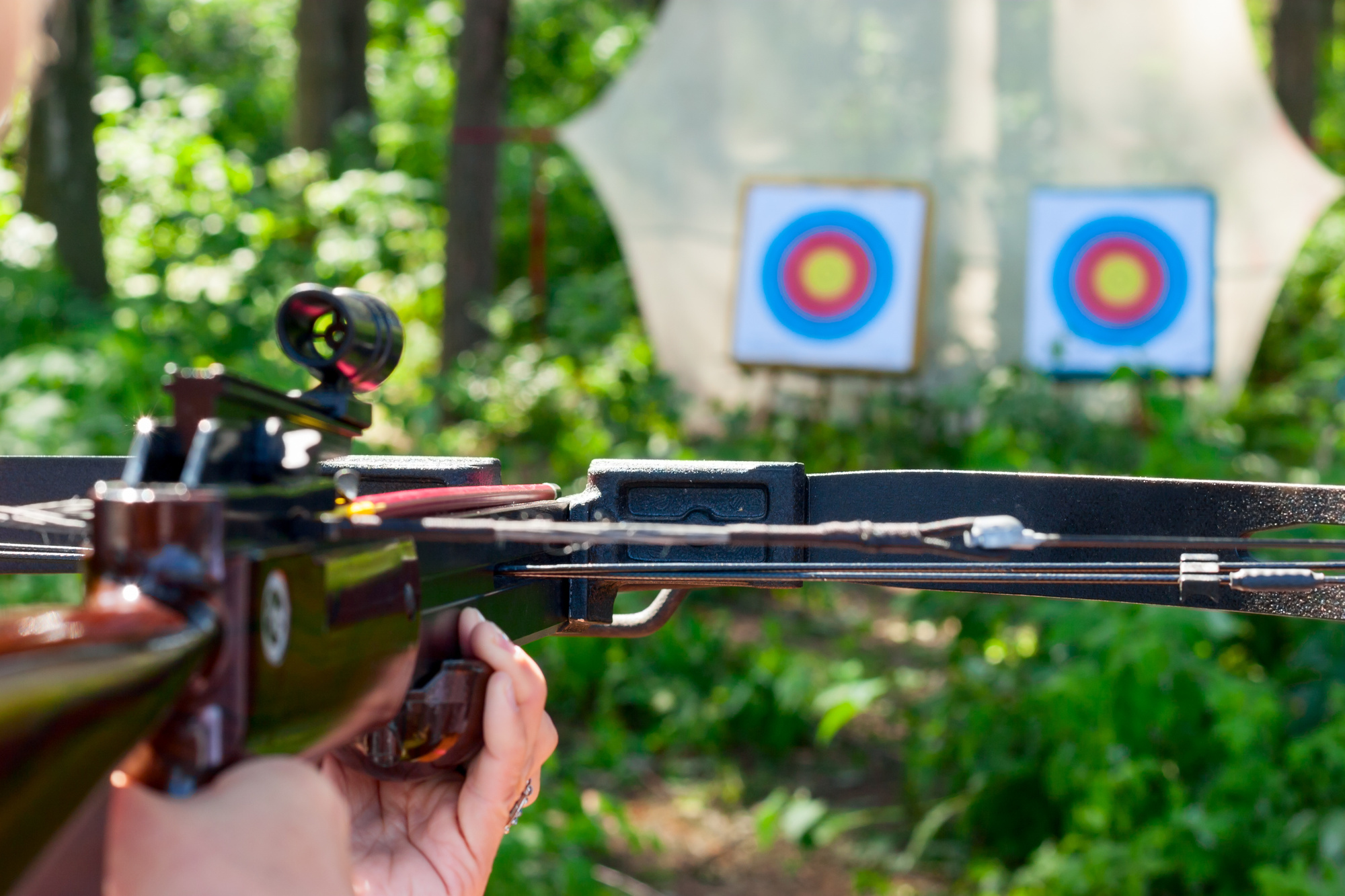
Did you notice on your last hunting trip that your buddy didn’t pull his crossbow arrows out of a pack? Then, after asking him about it you realized he actually fletched his own?
Tuning your own arrows is a great way to improve your accuracy that goes beyond the time you spend shooting into the hay bale (although that doesn’t hurt). Keep reading to find out why fletching your own arrows will help and what you need to know to do it well.
If you’re just starting out, don’t think tackling something like this is outside the scope of your expertise. Even if you’re just getting started, this is a straightforward process that can be useful for any archer at any level.
This practice may even turn into a new hobby!
Why You Should Spend the Time
The simple reason to invest in this “upgrade” to your crossbow arrows is the improved accuracy you’ll gain. Beyond that, you’ll be more in tune with your gear than you were before you started.
Speaking of tuning, you’re probably already tuning your bow. Or if it’s brand new, you know that you will need to be aware of the tuning down the road.
Basically, proper maintenance of your crossbow is already on your radar. Now it’s time to invest some of that care into your crossbow arrows as well.
Fletching your own bolt ensures your arrow will fly straight to its target every time. Packaged arrows are fine, but they have the potential for getting damaged during shipping.
You also want to shoot in practice what you’re going to use when shooting at the real thing. Take the time to fletch your arrows, practice with them, and fine-tune the process that works best for you. All these things will pay off when it’s time to lift the sights for real.
How Do You Fletch Crossbow Arrows?
Before we jump into the arrows themselves, it’s appropriate to step back and make sure the technique you use with your bow is correct.
Taking a quick look at that may seem overly simplistic. But if your technique is off, you will only be more and more frustrated as you try to fine tune arrows with poor results. In other words, fletching your own arrows won’t fix your technique as an archer!
First, we will address the components you need to start tuning your arrows.
The Bolt
You want the bolt to be as straight as possible. That may sound like a no-brainer, but there are different quality bolts available. Spend a little more for a better quality bolt.
Make sure the bolt you buy has nocks on it that are compatible with your bow. There’s not much worse than going through this whole exercise and realizing the bolt you bought won’t work.
The Broadhead
You may already have a style you like. That’s fine, you can stick with what you like. Keep in mind how much the broadhead weighs as it compares to the rest of the bolt and vanes.
You don’t want to add too much weight to your bolt, it will shed too much speed and be ineffective. But on the flipside, you don’t want to lose so much weight in the pursuit of speed that it dips under the optimum weight prescribed by your bow.
The manufacturer of your bow knows best. Follow their lead and land as close to the weight recommendation as possible.
The Feathers or Vanes
Here too, you need to know what’s recommended for your bow. If you already have the bolt and you followed the instructions above, you bought ones with the correct nocks on it.
The key to buying vanes is simple: Buy ones that fit the nock pattern for your bolt and rig. From there, you can start to have some fun.
Some Assembly Required
This may sound intimidating, but it’s really not that bad. You have all the pieces and it’s pretty obvious where they all go.
When gluing the vanes onto your bolt, the best tip we can offer is to get a slow-drying glue. Don’t worry about making a mess, you’re not the first. But slower drying glue gives a little leeway before everything becomes solid.
The real fun with assembly is you now get to experiment with the type of rotation you want to achieve. There are three main styles:
- Straight – the vane sits straight on the bolt
- Offset – the vane sits straight, but with a slight twist from the back to the front of the fletching.
- Helical – the vanes are fletched with a slight curve.
Of those three, the helical fletch tends to get the best results. But this begins to move into the realm of personal preference pretty quickly. There’s some science to how the arrows fly, yes. But at the end of the day, your comfort is key.
One way to test your work is with an arrow spinner. They will help you test the wobble in your crossbow arrows to make sure you have put together something that will fly straight and true. They are very simple to make at home.
Own It
If you’ve ever spent any time around a competition pistol or rifle shooter, it won’t be long until you hear about the weight they prefer for their trigger. Each of them swears by what they have become accustomed to.
Some like a long pull that’s smooth and heavy. Others prefer the trigger to be right next to the guard so that the smallest touch fires a round.
Both of them are entitled to their own opinions.
The same is true with fletching. You may hear people who are strong proponents of certain fletching styles and mock those that don’t conform to their ideal.
Find the fletch that suits you and your bow the best and stand behind it. Enjoy the process and be creative as you experiment with different vanes and styles.
In short, enjoy your new hobby! Contact us anytime for the best in crossbow arrows and bows. We’d love to hear your story!
