This compound bow draw weight chart is the fastest way to pick a starting poundage. Match your body size and use case first, then confirm you can draw the bow smoothly while seated, cold, and wearing a jacket — not just standing in a warm shop.
Draw weight is peak pounds, the hardest part of the pull. Let-off then dumps most of that weight at full draw. A 60 lb compound with 80% let-off only holds about 12 lb at the wall. You still have to pull through 60 lb to get there.
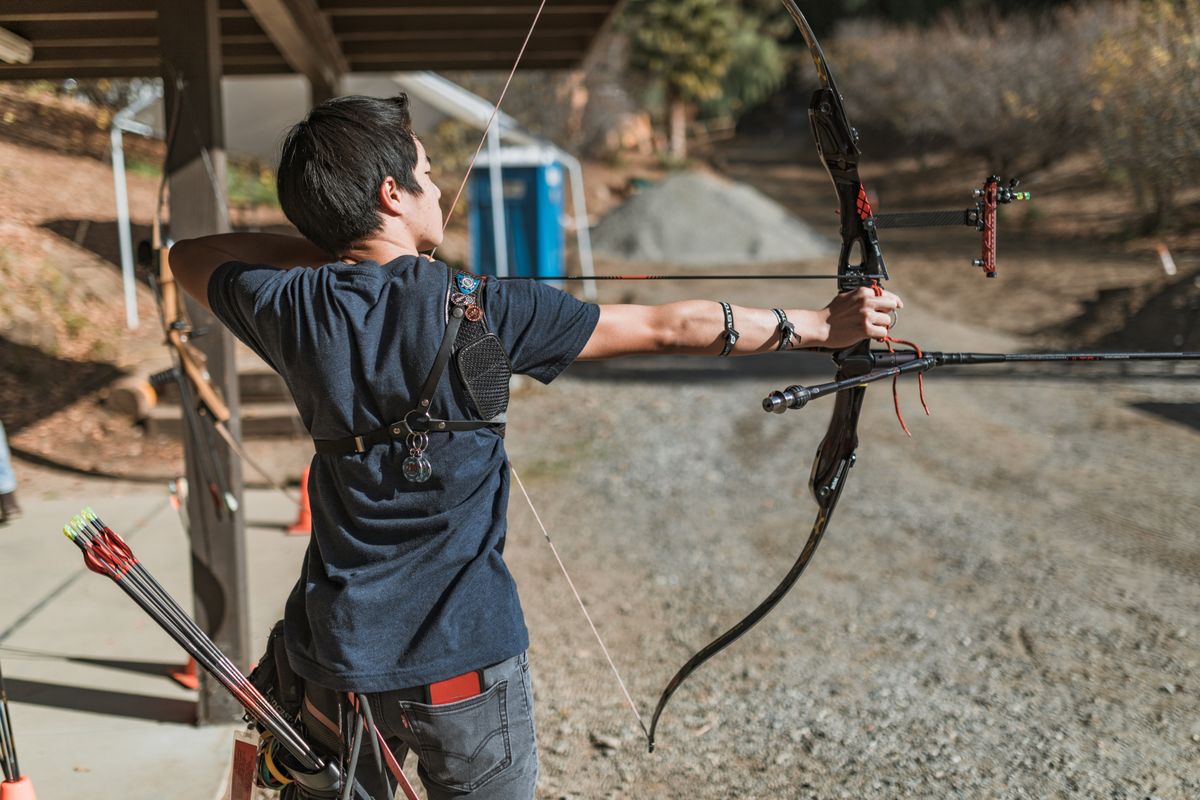
Compound bow draw weight chart by body size
Use this compound bow draw weight chart as a starting range, not a prescription. Strength, shoulder health, and how often you shoot matter more than the scale.
| Archer | Starting compound weight | Comfortable hunting goal |
|---|---|---|
| Small child, 70–100 lb | 15–25 lb | Practice only until form is solid |
| Larger child, 100–130 lb | 25–35 lb | 35–45 lb if the state allows youth hunting |
| Youth / teen, 130–150 lb | 30–40 lb | 40–50 lb |
| Small-frame woman, 100–130 lb | 25–35 lb | 40–50 lb |
| Medium-frame woman, 130–160 lb | 30–40 lb | 45–55 lb |
| Large-frame woman, 160+ lb | 40–50 lb | 50–60 lb |
| Small-frame man, 120–150 lb | 40–50 lb | 50–60 lb |
| Medium-frame man, 150–180 lb | 50–60 lb | 55–65 lb |
| Large-frame man, 180+ lb | 55–65 lb | 60–70 lb |
Start at the low end of the range. Buy a bow that adjusts 10–15 lb above your goal so you can turn the limbs up later. A 70 lb bow turned down to 50 lb is usually a worse performer than a 60 lb bow run near its peak.
Compound bow draw weight chart for hunting
Hunting poundage is a legal question and an ethical one. Most states that set a floor sit at 30–40 lb peak for deer-sized game. Several states set no minimum at all. Always check the current wildlife-agency page for the state you hunt.
| Game | Typical legal floor | Practical hunting range |
|---|---|---|
| Small game / turkey | Often none, or ~30 lb | 35–45 lb |
| Whitetail / antelope | Often 35–40 lb; some states none | 45–60 lb |
| Mule deer / black bear | Often 40 lb | 50–65 lb |
| Elk | 30–50 lb depending on state | 55–70 lb |
| Moose / large bear | 40–50 lb where listed | 60–70 lb plus a heavy arrow |
A well-tuned 45 lb setup with a heavy arrow and a sharp broadhead beats a sloppy 70 lb setup every time. Shot placement and arrow momentum matter more than the number on the limb.
For deer, 40 lb is enough in most legal and lethal conversations. The sweet spot for an adult who can handle it is 50–60 lb. That is also the range Realtree and most shop techs treat as “plenty” for a 27–29 inch draw on whitetails.
Confirm your own state’s rule before you hunt. A clear overview of how those minimums are written is on LegalClarity’s state draw-weight summary. Then open the official agency page. Laws change.
Men, women, and youth: how to read the numbers
Men. Most adult male hunters land at 55–65 lb. Target-only shooters can stay at 45–55 lb and shoot more arrows. Going past 70 lb rarely adds useful speed once arrow mass has to climb with the poundage. If you cannot draw from a chair without pointing the bow at the ceiling, you are overbowed.
Women. Fit beats “women’s bow.” Many women hunt cleanly at 40–55 lb. Shorter draw length and a lighter mass weight usually matter more than a pink riser. See our guide to finding the right women’s compound bow for models that cover short-to-average draws.
Youth. Start light enough that form stays pretty after 20 arrows. Kids under about 10 do well on a Genesis-style bow at 10–20 lb. Pre-teens who may hunt later need an adjustable bow that starts around 5–15 lb and can grow into 40–50 lb. The best compound bows for beginners list covers the Royale, Legit, and Infinite 305 ranges.
How let-off changes what you feel
Peak weight is the number shops, spine charts, and game wardens use. Holding weight is peak × (1 − let-off).
- 50 lb at 80% let-off → about 10 lb to hold
- 60 lb at 80% let-off → about 12 lb to hold
- 70 lb at 80% let-off → about 14 lb to hold
- 60 lb at 65% let-off → about 21 lb to hold
High let-off helps you wait on a deer. It does not make the peak easier. If you have to heave the string to the wall, drop 5–10 lb.
The 10-second test
Before you lock in a number:
- Set draw length first. Wrong length makes any weight feel worse. Use our how to find your draw length guide if you have not measured yet.
- Draw from a seated position, bow level, no sky-draw.
- Anchor and hold 8–10 seconds without the pin falling apart.
- Let down under control. Repeat 8–10 times.
- If the last two reps look different from the first two, the weight is too high.
A simple field rule: you should be able to shoot about 30 arrows without your form collapsing. If you cannot, turn the limb bolts out (usually 2–4 turns from max, following the manufacturer) or drop to a lighter limb package.
How to adjust draw weight on a compound
Most hunting compounds let you change peak weight about 10 lb per limb set by turning both limb bolts evenly. Count the turns. Do not back a bolt out past the maker’s limit or the limb can come off the pocket.
Wide-range beginner bows (Diamond Infinite 305, Bear Legit, Sanlida X8) often cover 10–70 lb without a press. Flagships usually live in a 10 lb window on one set of limbs. If you need 40 lb now and 60 lb next fall, buy the adjustable bow, not a 70 lb flagship you cannot draw in November.
Compare current adjustable packages in our best compound bows of 2026 picks and the best compound bow under $500 guide.
Draw weight, arrows, and speed
Heavier poundage is not free speed. Industry practice is at least 5 grains of arrow per pound of peak weight. A 60 lb bow wants a 300-grain minimum; most hunters shoot heavier than that on purpose.
Past about 60 lb, extra pounds add less speed than a better arrow and a sharper broadhead. If you drop weight, recheck spine. A 70 lb arrow on a 50 lb bow is stiff and noisy. Use the guide to choosing compound bow arrows after you set poundage.
FAQ
What does a compound bow draw weight chart actually tell you?
A compound bow draw weight chart gives a starting range by body size and use. It cannot replace the seated 10-second hold test or your state hunting rule.
Is 40 lb enough to hunt deer?
Yes, in most states, with a tuned arrow and a sharp broadhead inside honest yardage. Forty pounds is a common legal floor. Many hunters prefer 50–60 lb because it is easier to keep a flat trajectory.
Should I buy a 70 lb bow and turn it down?
Only if you will hunt near that peak within a season. A bow is most efficient near its designed peak. If 50 lb is your real number this year, buy a 50–60 lb package.
Do women need a different chart?
No. Use the same compound bow draw weight chart and pick the row that matches frame and strength. Short draw length is the spec that usually needs its own bow.
Can a kid hunt with a youth bow?
If they can draw it cleanly and the peak meets the state minimum. Many youth bows top out at 40–50 lb, which covers deer in a lot of states. Form first, tags second.
Does let-off count for the legal minimum?
No. Wardens and spine charts use peak draw weight, not holding weight.
What to do next
Read the compound bow draw weight chart, pick the low end of your row, and test that number seated. Then write down peak weight, let-off, and draw length together. Those three numbers pick the bow, the arrows, and whether the setup is legal where you hunt.
- Measure draw length.
- Choose a starting peak weight from the chart.
- Confirm it with the 10-second test.
- Check your state minimum if you hunt.
- Set arrow spine and length to that peak weight.
If groups open up in the cold or from a stand, drop 5 lb. Accuracy is the real hunting advantage.
